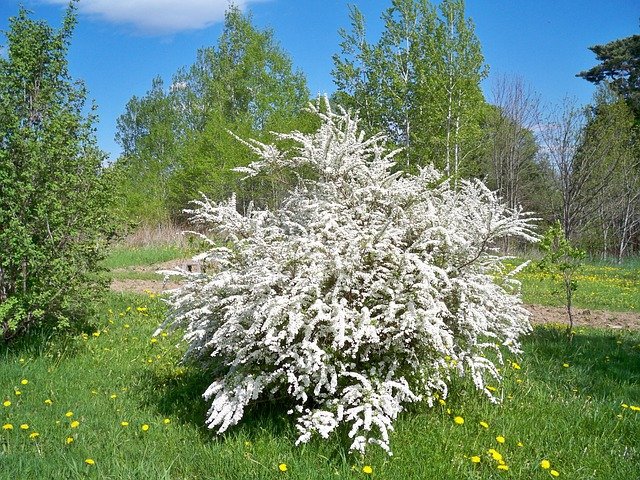
Spiraea is one of the best-known and most popular ornamental shrubs. It can be found in almost all parks, gardens, or as hedges. They are popular for their abundant and colorful blooms.
As for soil quality, they are very undemanding and thrive almost anywhere. They can even tolerate air pollution. They are not susceptible to pests or diseases. Yet, in the spring, they reward us with a profusion of intensely fragrant flowers. However, they thrive best in sunny locations, where they also bloom most profusely. Based on their flowering time, spiraea are divided into spring and summer varieties.
Spring spiraea
always bloom white.
Summer spiraea
have flowers that are
white, pink, or crimson red. Their flowers appear from June to September. Some summer-flowering spiraea are suitable as groundcover plants or for flowering border beds.
There are several species of spiraea
–
birch-leaved
–
Japanese
–
prostrate
–
Japanese
–
dwarf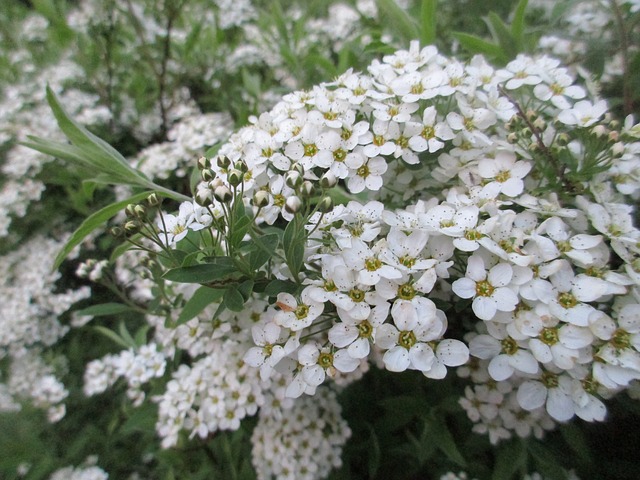
One of the more attractive spiraea varieties is the Japanese spiraea. It is characterized by abundant blooms that begin in mid-June and continue until the end of August. The flowers are bright pink and arranged in terminal panicles. Prune spent blooms once a week to extend the flowering period until September. The shrub propagates itself via root suckers. Japanese spiraea is as undemanding as other spiraea species. If you still want to give it extra care, provide it with slightly acidic, nutrient-rich soil and a spot in full sun. It will bloom profusely and for a long time. To maintain a compact growth habit, you can prune the shrub twice a year, though this is not necessary. If you allow it to grow freely, it will still look neat and airy. You can plant it as a specimen plant. It works well in both small and larger gardens. If you combine it with other types of flowers, you’ll be pleasantly surprised by the result.
Spiraea are hardy down to -34°C. You can also grow them in outdoor containers.
